View Metadata
Flood Insurance Risk Zones, New York, 2011
- Identification Information
- Data Quality Information
- Spatial Data Organization Information
- Spatial Reference Information
- Entity and Attribute Information
- Distribution Information
- Metadata Reference Information
- Identification Information
- Citation
- Originator
- United States. Federal Emergency Management Agency
- Publication Date
- 20110317
- Title
- Flood Insurance Risk Zones, New York, 2011
- Geospatial Data Presentation Form
- vector digital data
- Publication Information
- Publication Place
- Washington, DC
- Publisher
- Federal Emergency Management Agency (FEMA)
- Online Linkage
- https://hgl.harvard.edu/catalog/harvard-fema-36-fld-haz-ar-ny
- Abstract
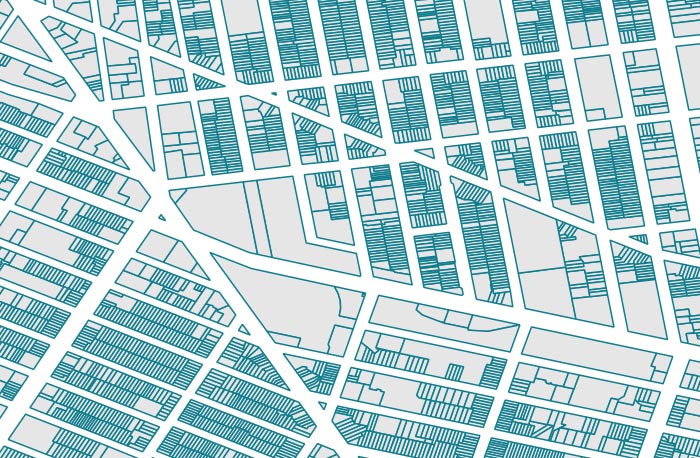
- The flood insurance risk zone layer contains information about the flood hazards for New York. These zones are used by the federal Emergency Management Agency (FEMA) to designate the Special Flood Hazard Area (SFHA) and for insurance rating purposes. These data are the flood hazard areas that are or will be depicted on the Flood Insurance Rate Map (FIRM). The spatial elements representing the flood zones are polygons. There is one polygon for each contiguous flood zone designated. This layer is part of the National Flood Hazard Layer dataset: The National Flood Hazard Layer (NFHL) data incorporates all Digital Flood Insurance Rate Map(DFIRM) databases published by FEMA, and any Letters Of Map Revision (LOMRs) that have been issued against those databases since their publication date. The DFIRM Database is the digital, geospatial version of the flood hazard information shown on the published paper Flood Insurance Rate Maps(FIRMs). The primary risk classifications used are the 1-percent-annual-chance flood event, the 0.2-percent-annual-chance flood event, and areas of minimal flood risk. The NFHL data are derived from Flood Insurance Studies (FISs), previously published Flood Insurance Rate Maps (FIRMs), flood hazard analyses performed in support of the FISs and FIRMs, and new mapping data where available. The FISs and FIRMs are published by the Federal Emergency Management Agency (FEMA). The specifications for the horizontal control of DFIRM data are consistent with those required for mapping at a scale of 1:12,000. The NFHL data contain layers in the Standard DFIRM datasets except for S_Label_Pt and S_Label_Ld. The NFHL is available as State or US Territory data sets. Each State or Territory data set consists of all DFIRMs and corresponding LOMRs available on the publication date of the data set.
- Purpose
- The FIRM is the basis for floodplain management, mitigation, and insurance activities for the National Flood Insurance Program (NFIP). Insurance applications include enforcement of the mandatory purchase requirement of the Flood Disaster Protection Act, which "... requires the purchase of flood insurance by property owners who are being assisted by Federal programs or by Federally supervised, regulated or insured agencies or institutions in the acquisition or improvement of land facilities" (Section 2 (b) (4) of the Flood Disaster Protection Act of 1973). In addition to the identification of Special Flood Hazard Areas (SFHAs), the risk zones shown on the FIRMs are the basis for the establishment of premium rates for flood coverage offered through the NFIP. The NFHL data present the flood risk information depicted on the FIRM in a digital format suitable for use in electronic mapping applications. The NFHL database is a subset of the information created for the FIS and serves as a means to archive a portion of the information collected during the FIS.
- Temporal Extent
- Currentness Reference
- Represents effective DFIRMs and LOMRs available as of the publication date for the acquired State or Territory data set.
- Time Instant
- 20110317
- Bounding Box
- West
- -79.762168
- East
- -71.854364
- North
- 45.010647
- South
- 40.486083
- Theme Keyword
- Floods
- Flood forecasting
- Floodplains
- Flood insurance
- Theme Keyword Thesaurus
- LCSH
- ISO Topic Category
- inlandWaters
- Theme Keyword
- DFIRM
- FIRM
- FEMA Flood Hazard Zone
- DFIRM Database
- Special Flood Hazard Area
- Digital Flood Insurance Rate Map
- CBRS
- Coastal Barrier Resources System
- Riverine Flooding
- Coastal Flooding
- NFIP
- Base Flood Elevation
- SFHA
- Flood Insurance Rate Map
- Floodway
- Theme Keyword Thesaurus
- FEMA NFIP Topic Category
- Place Keyword
- New York
- Place Keyword Thesaurus
- GNIS
- Temporal Keyword
- Access Restrictions
- None.
- Use Restrictions
- Acknowledgement of FEMA would be appreciated in products derived from these data.
- Status
- Complete
- Maintenance and Update Frequency
- Monthly
- Point of Contact
- Contact Organization
- Federal Emergency Management Agency
- Delivery Point
- 500 C Street, S.W.
- City
- Washington
- State
- District of Columbia
- Postal Code
- 20472
- Country
- USA
- Contact Telephone
- 1-877-FEMA-MAP
- Contact Electronic Mail Address
- fema-mscservice@dhs.gov
- Native Data Set Environment
- ESRI ArcCatalog 9.3.1
- Cross-Reference
- Originator
- United States. Federal Emergency Management Agency
- Publication Date
- 20110317
- Title
- National Flood Hazard Layer
- Geospatial Data Presentation Form
- vector digital data
- Publication Information
- Publication Place
- Washington, DC
- Publisher
- Federal Emergency Management Agency (FEMA)
- Online Linkage
- http://www.msc.fema.gov
- Cross-Reference
- Originator
- United States. Federal Emergency Management Agency
- Title
- FEMA Guidelines and Specifications for Flood Hazard Mapping Partners, Appendix L: Guidance for Preparing Draft Digital Data and DFIRM Databases
- Geospatial Data Presentation Form
- document
- Publication Information
- Publication Place
- Washington, DC
- Publisher
- Federal Emergency Management Agency (FEMA)
- Online Linkage
- http://nrs.harvard.edu/urn-3:FHCL:012883724_5126571
- Online Linkage
- http://www.fema.gov/fhm/dl_cgs.shtm
- Data Quality Information
- Attribute Accuracy Report
- The National Flood Hazard Layer (NFHL) data incorporates all Digital Flood Insurance Rate Map(DFIRM) databases published by FEMA, and any Letters Of Map Revision (LOMRs) that have been issued against those databases since their publication date. The DFIRM Database consists of community based vector files and associated attributes produced in conjunction with the hard copy FEMA FIRM. The published effective FIRM and DFIRM maps are issued as the official designation of the Special Flood Hazard Areas (SFHAs). As such they are adopted by local communities and form the basis for administration of the National Flood Insurance Program (NFIP). For these purposes they are authoritative. Provisions exist in the regulations for public review, appeals and corrections of the flood risk information shown to better match real world conditions. As with any engineering analysis of this type, variation from the estimated flood heights and floodplain boundaries is possible. Details of FEMA's requirements for the FISs and flood mapping process that produces these data are available in the Guidelines and Specifications for Flood Hazard Mapping Partners. Attribute accuracy was tested by manual comparison of source graphics with hardcopy plots and a symbolized display on an interactive computer graphic system. Independent quality control testing of FEMA's DFIRM databases was also performed. To obtain more detailed information in areas where Base Flood Elevations (BFEs) and/or floodways have been determined, users are encouraged to consult the Flood Profiles and Floodway Data and/or Summary of Stillwater Elevations tables contained within the FIS report that accompanies the individual components of the DFIRM data. Users should be aware that BFEs shown in the S_BFE table represent rounded whole-foot elevations. These BFEs are intended for flood insurance rating purposes only and should not be used as the sole source of flood elevation information. Accordingly, flood elevation data presented in the FIS report must be used in conjunction with the FIRM for purposes of construction and/or floodplain management. The 1-percent-annual-chance water-surface elevations shown in the S_XS table match the regulatory elevations shown in the FIS report.
- Logical Consistency Report
- When FEMA revises an FIS, adjacent studies are checked to ensure agreement between flood elevations at the boundaries. Likewise flood elevations at the confluence of streams studied independently are checked to ensure agreement at the confluence. The FIRM and the FIS are developed together and care is taken to ensure that the elevations and other features shown on the flood profiles in the FIS agree with the information shown on the FIRM. However, the elevations as shown on the FIRM are rounded whole-foot elevations. They must be shown so that a profile recreated from the elevations on the FIRM will match the FIS profiles within one half of one foot.
- Completeness Report
- Information contained in the National Flood Hazard Layer data reflects the content of the source materials. Features may have been eliminated or generalized on the source graphic, due to scale and legibility constraints. With new mapping, FEMA plans to maintain full detail in the spatial data it produces. However, older information is often transferred from existing maps where some generalization has taken place. Flood risk data are developed for communities participating in the NFIP for use in insurance rating and for floodplain management. Flood hazard areas are determined using statistical analyses of records of river flow, storm tides, and rainfall; information obtained through consultation with the communities; floodplain topographic surveys; and hydrological and hydraulic analysis. Both detailed and approximate analyses are employed. Generally, detailed analyses are used to generate flood risk data only for developed or developing areas of communities. For areas where little or no development is expected to occur, FEMA uses approximate analyses to generate flood risk data. Typically, only drainage areas that are greater than one square mile are studied. The National Flood Hazard Layer data reflects the most current information available when the distribution data set was created.
- Horizontal Positional Accuracy Report
- The National Flood Hazard Layer data consists of community based vector files and associated attributes produced in conjunction with the hardcopy FEMA FIRM. The published effective FIRM and DFIRM maps are issued as the official designation of the SFHAs. As such they are adopted by local communities and form the basis for administration of the NFIP. For these purposes they are authoritative. Provisions exist in the regulations for public review, appeals and corrections of the flood risk information shown to better match real world conditions. As with any engineering analysis of this type, variation from the estimated flood heights and floodplain boundaries is possible. Details of FEMA's requirements for the FISs and flood mapping process that produces these data are available in the Guidelines and Specifications for Flood Hazard Mapping Partners. Horizontal accuracy was tested by manual comparison of source graphics with hardcopy plots and a symbolized display on an interactive computer graphic system. Independent quality control testing of the individual DFIRM data sets was also performed.
- Lineage
- Source
- Originator
- United States. Federal Emergency Management Agency
- Publication Date
- 20110317
- Title
- National Flood Hazard Layer
- Geospatial Data Presentation Form
- vector and raster digital data
- Publication Information
- Publication Place
- Washington, DC
- Publisher
- Federal Emergency Management Agency (FEMA)
- Type of Source Media
- online
- Source Temporal Extent
- Time Period Information
- Single Date/Time
- Calendar Date
- 20110317
- Source Currentness Reference
- Available effective DFIRMs and LOMRs issued against those DFIRMs.
- Contribution
- Spatial and attribute information, floodplain widths, BFEs, floodplain location.
- Spatial Data Organization Information
- Direct Spatial Reference Method
- Vector
- Point and Vector Object Information
- SDTS Terms Description
- SDTS Point and Vector Object Type
- G-polygon
- Point and Vector Object Count
- 45304
- Spatial Reference Information
- Horizontal Coordinate System Definition
- Geographic
- Latitude Resolution
- 0.000001
- Longitude Resolution
- 0.000001
- Geographic Coordinate Units
- Decimal degrees
- Geodetic Model
- Horizontal Datum Name
- North American Datum of 1983
- Ellipsoid Name
- Geodetic Reference System 80
- Semi-major Axis
- 6378137.000000
- Denominator of Flattening Ratio
- 298.257222
- Entity and Attribute Information
- Entity Type
- Entity Type Label
- FEMA_36_FLD_HAZ_AR_NY
- Entity Type Definition
- Location and attributes flood insurance risk zones on the DFIRM
- Entity Type Definition Source
- FEMA Guidelines and Specifications for Flood Hazard Mapping Partners, Appendix L: Guidance for Preparing Draft Digital Data and DFIRM Databases (available at http://www.fema.gov/fhm/dl_cgs.shtm and http://nrs.harvard.edu/urn-3:FHCL:012883724_5126571)
- Attributes
- OBJECTID_1
- Internal feature number. (Sequential unique whole numbers that are automatically generated.)
- Definition Source
- ESRI
- OBJECTID
- Internal feature number. (Sequential unique whole numbers that are automatically generated.)
- Definition Source
- ESRI
- DFIRM_ID
- FLD_AR_ID
- Primary key for table lookup. Assigned by table creator.
- Definition Source
- FEMA Guidelines
- FLD_ZONE
- Flood Zone. This is the flood insurance risk zone designation. These zones are used by the Federal Emergency Management Agency (FEMA) to designate Special Flood Hazard Areas (SFHAs) and for insurance rating purposes. Some older FEMA FIRMs were prepared in the Standard format that uses Zones B, C and numbered A and V zones. Newer FIRMs use the Map Initiatives format where the B corresponds to 0.2 PCT ANNUAL CHANCE FLOOD HAZARD; C corresponds to Zone X; numbered A zones (e.g., A1, A2, A3) correspond to Zone AE; and numbered V zones (e.g., V1, V2, V3) correspond to Zone VE. All Digital Flood Insurance Rate Maps (DFIRMs) should use the Map Initiatives zone designations. See Volume 1, Subsection 1.4.6.1.5 of these Guidelines for details on the flood insurance risk zones. (NOTE: The symbol '%' is a reserved symbol in most software packages so the word 'percent' was abbreviated as 'PCT'.)
- Definition Source
- FEMA Guidelines
- FLOODWAY
- Floodway Type. Floodway areas are designated by the Federal Emergency Management Agency to provide an area that must be kept free of encroachment so that the 1-percent-annual-chance flood event can be carried without substantial increase in flood heights. Normal floodway areas are 'floodway'. Special cases will have a note on the hardcopy Flood Insurance Rate Map.
- Definition Source
- FEMA Guidelines
- SFHA_TF
- Special Flood Hazard Area. If the area is within SFHA this field would be True. This field will be true for any area that is coded for any A or V zone flood areas. It should be false for any X or D zone flood areas. Enter "T" for true or "F" for false.
- Definition Source
- FEMA Guidelines
- STATIC_BFE
- Static Base Flood Elevation. For areas of constant Base Flood Elevation (BFE), the BFE value is shown beneath the zone label rather than on a BFE line. In this situation the same BFE applies to the entire polygon. This is normally occurs in lakes or coastal zones. This field is only populated where a static BFE is shown on the FIRM.
- Definition Source
- FEMA Guidelines
- V_DATUM
- Vertical Datum. The vertical datum indicates the reference surface from which the flood elevations are measured. Normally this would be North American Vertical Datum of 1988 for new studies. This field is only populated if the STATIC_BFE field is populated. Acceptable values for this field are listed in the D_V_Datum table.
- Definition Source
- FEMA Guidelines
- DEPTH
- Depth Value for Zone AO Areas. This is shown beneath the zone label on the FIRM. This field is only populated if a depth is shown on the FIRM.
- Definition Source
- FEMA Guidelines
- LEN_UNIT
- Length Units. This unit indicates the measurement system used for the BFEs and/or depths. Normally this would be feet. This field is only populated if the STATIC_BFE or DEPTH field is populated. Acceptable values for this field are listed in the D_Length_Units table.
- Definition Source
- FEMA Guidelines
- VELOCITY
- Velocity Measurement. This is shown beneath the zone label on the FIRM for alluvial fan areas (certain Zone AO areas). This value represents the velocity of the flood flow in this area. This field is only populated when a velocity is shown on the FIRM.
- Definition Source
- FEMA Guidelines
- VEL_UNIT
- Unit of Measurement for the Velocity Attribute. This is shown in the legend where alluvial fans are present. This field is only populated if the VELOCITY field is populated. Acceptable values for this field are listed in the D_Velocity_Units table.
- Definition Source
- FEMA Guidelines
- AR_REVERT
- If the area is Zone AR, this field would hold the zone that the area would revert to if the AR zone were removed. This field is only populated if the corresponding area is Zone AR. Acceptable values for this field are listed in the D_Zone table.
- Definition Source
- FEMA Guidelines
- BFE_REVERT
- If Zone is Zone AR, this field would hold the static base flood elevation for the reverted zone. This field is populated when Zone equals AR and the reverted zone has a static BFE.
- Definition Source
- FEMA Guidelines
- DEP_REVERT
- If Zone is Zone AR, this field would hold that flood depth for the reverted zone. This field is populated when Zone equals AR and the reverted zone has a depth assigned.
- Definition Source
- FEMA Guidelines
- SOURCE_CIT
- Source Citation. Abbreviation used in the metadata file when describing the source information for the S_Fld_Haz_Ar table. Normally, the flood hazard area polygon will be divided to distinguish areas modified by the most recent revision from areas based on the effective FIRM prior to the most recent revision. Revisions and sources prior to the most recent revision will not be tracked for individual polygons in the flood hazard areas table in the standard database.
- Definition Source
- FEMA Guidelines
- HYDRO_ID
- Hydrologic Model Identification. A code that provides a link to the hydrologic model table, L_Hydro_Model. The L_Hydro_Model table provides information on the methods used to determine the flood hazard for areas of shallow flooding and ponding. This ID field must contain a number that matches the HYDRO_ID field for a record in the L_Hydro_Model table. This attribute is only required for flood hazard areas with AO and AH zone designations or ponding associated with AE zones.
- Definition Source
- FEMA Guidelines
- CST_MDL_ID
- Coastal Model Identification. This field is populated by a linking element to the L_Cst_Model table. The L_Cst_Model table contains detailed information about the coastal models that were used to determine the coastal flood hazard for this area. This ID field must contain a number that matches the CST_MDL_ID field for a record in the L_Cst_Model table that documents coastal model information. This attribute is only required in areas for which flood hazard determinations do not consider wave hazards. The static BFE values in these areas are based on surge modeling and/or tidal analyses. When wave hazards are considered modeling information is linked to the transects used to complete the wave analysis.
- Definition Source
- FEMA Guidelines
- SHAPE
- Feature geometry. (Coordinates defining the features.)
- Definition Source
- ESRI
- SHAPE.AREA
- Area of feature in square coverage units
- Definition Source
- ESRI
- SHAPE.LEN
- Length of arc in coverage units
- Definition Source
- ESRI
- Distribution Information
- Format Name
- Shapefile
- Distributor
- Harvard Geospatial Library
- Online Access
- http://hgl.harvard.edu/
- Name
- Metadata Reference Information
- Metadata Date
- 20110822
- Metadata Contact
- Contact Information
- Contact Organization Primary
- Contact Organization
- Harvard Geospatial Library
- Contact Position
- Geospatial Resources Cataloger
- Contact Address
- Address
- Harvard University Library
- Address
- Office For Information Systems
- Address
- 90 Mount Auburn Street
- City
- Cambridge
- State or Province
- MA
- Postal Code
- 02138
- Country
- USA
- Contact Voice Telephone
- 617-495-2417
- Contact Facsimile Telephone
- 617-496-0440
- Contact Electronic Mail Address
- hgl_ref@hulmail.harvard.edu
- Hours of Service
- Monday - Friday, 9:00 am - 4:00 pm EST-USA
- Metadata Standard Name
- FGDC Content Standards for Digital Geospatial Metadata
- Metadata Standard Version
- FGDC-STD-001-1998